Julia Prince, RLA, ASLA, AIA
Associate, Design Workshop
-
Julia Prince is a registered Landscape Architect in California and an Associate at Design Workshop’s Los Angeles Studio. Through empathetic engagement with people and places, she allies client and community visions with the inherent story of the land. She creates thoughtful, regenerative designs that integrate ecological and cultural assets both functionally and poetically. From high-end residences to large-scale ecological restorations, Prince considers every project to be an opportunity to innovate. She believes in the capacity for landscapes to be places of transcendence. Across project types, scales and geographies, she strives to inspire connection with nature, spirit, and meaning beyond the surface level elements of design.
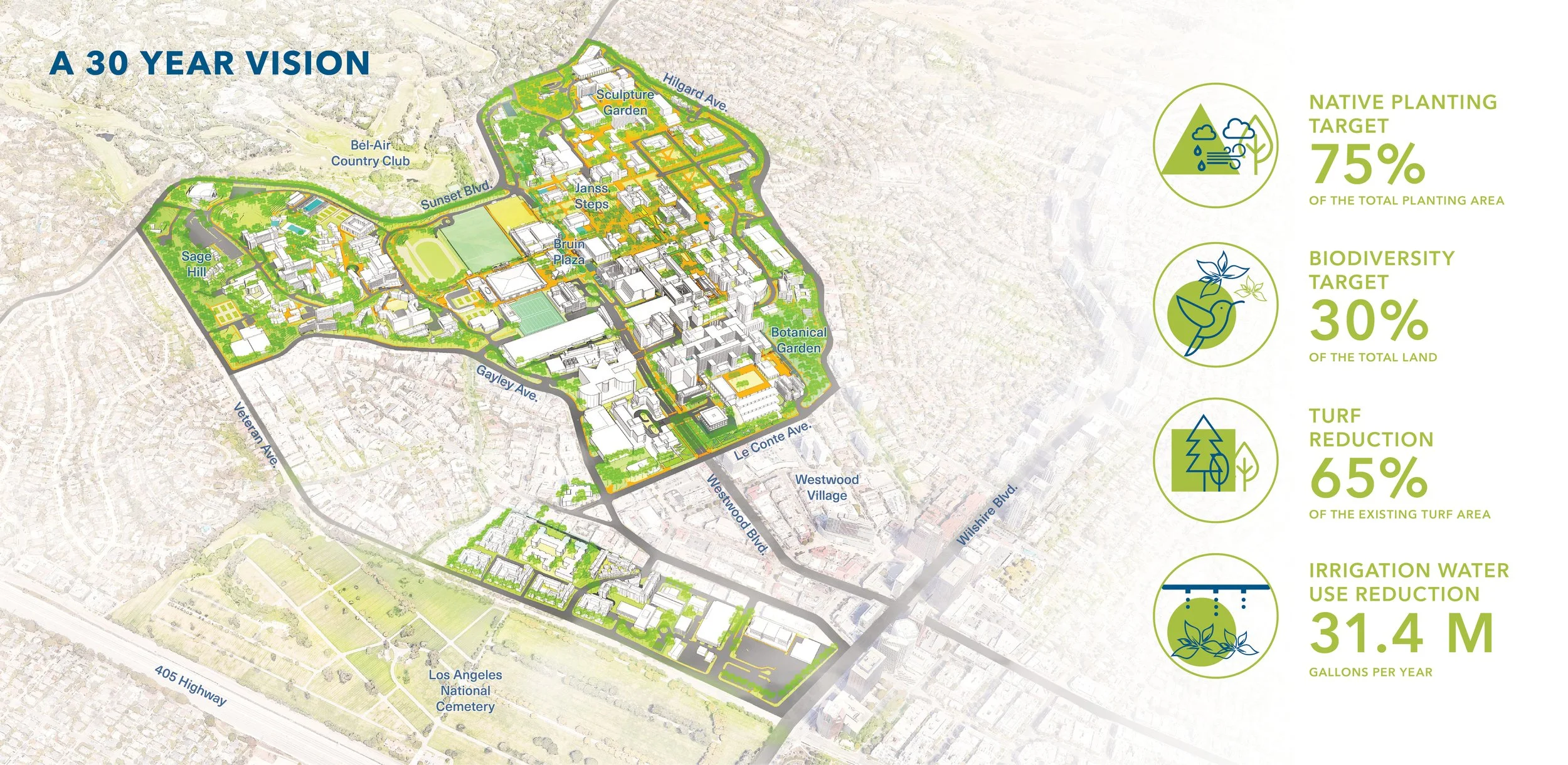
Prince leads projects at Design Workshop including the UCLA Landscape Framework Master Plan; the Topanga Lagoon Restoration Project; and private residences in Malibu, Pacific Palisades, and Beverly Hills. She is a leading member of the Design Workshop Foundation, helping deliver quality designs to under-resourced communities.
Before joining Design Workshop, Prince participated in award-winning work on the Dolores Street Pollinator Boulevard at BASE Landscape Architecture and was recognized for her Graduate research by MIG, LAM, and The Wildlife Society. Prince’s interest in the intersection of non-western ontologies and water infrastructure in California guided her thesis topic, which investigated methods of cultural and ecological conservation on private lands and the restoration of tribal river governance in ancestral territory near Lake Shasta, California. Prince received her master’s in Landscape Architecture from UC Berkeley and her bachelor’s in Community Development and Applied Economics from the University of Vermont.
-
Performance Based Practice
The City of Los Angeles is home to an extraordinary number of endemic species that exist nowhere else. It is situated within the California Floristic Province, one of 36 global biodiversity hotspots. California’s biodiversity faces mounting threats from climate change, urban expansion, and other pressures, which could drive the loss of up to two-thirds of its endemic species by 2100.
Protecting Los Angeles’s exceptional ecological richness begins with protecting its water. The sustenance of the city’s biodiversity and native ecosystems depends on the conservation of its limited water resources and the maintenance of historic hydrological patterns.
Water scarcity has always defined life in California, just as it has in the Rocky Mountain West where Design Workshop was founded. Central to the firm’s ethos is resource stewardship and the understanding of water conservation as an essential element of landscape design.
Today, with a national practice spanning climates and jurisdictions from East to West, Design Workshop interacts with water in a spectrum of different ways. The firm specializes in place-based designs that uphold function and beauty. Instead of reinforcing singular understandings of what institutional or public spaces should look and feel like, it envisions landscapes that respond authentically to local conditions, foremost the availability of water. Its designs seek to align perceptions of what landscape should be with what resources are naturally present.
But what does resource conservation mean in a place where native landscapes are so profoundly modified by development? LA is highly urbanized, with a complex history of settlement, inhabited by species and cultures from across the planet. How do we honor historic ecology while making space for the residents of today? When turning back the clock is not a productive goal, what does landscape restoration look like?